
The global learning crisis is not only a question of access to technology, but access to high-quality instruction and the skills to adapt as technology changes. AI creates new possibilities for educators and NGOs to provide more responsive, personalized support, but only if organizations have the capacity to select, adapt, evaluate, and integrate AI responsibly. Team4Tech partners with education-focused NGOs to close that gap through a combination of peer learning, micro-grants, and ongoing coaching to help them integrate AI responsibly in their local education contexts
Team4Tech is an impact accelerator for education-focused NGOs, building organizational and technical capacity for community-based organizations serving learners in under-resourced contexts all over the world.
We meet NGOs where they are, building their foundational understanding of AI, co-developing tools tailored to their most pressing education challenges, and offering the coaching and funding they need to test and launch solutions. From there, we help NGOs scale proven solutions by partnering with national governments to expand their reach to more educators and learners over time.
We help our partner NGOs bridge global, evidence-based best practices in AI for education with on-the-ground realities, including limited connectivity and devices.
Over the past two years, Team4Tech has delivered AI capacity-building programs to 80+ NGOs, reaching more than 1 million learners. Our data shows that 90% of participating nonprofits report substantial or transformative AI-enabled efficiency gains.

Our peer learning cohorts bridge knowledge and practice. Through research-informed coursework, implementation planning, and follow-on coaching from local experts, we help NGOs:
- Identify and test AI use cases aligned with their education priorities and organizational mission
- Translate learnings into effective practices in their local contexts

NGO graduates from our cohorts are using AI to strengthen teaching and learning, build durable skills and AI literacy among students, and improve operational efficiency. Across our AI peer learning cohorts, common AI use cases include adaptive learning, lesson planning, teaching + learning materials (TLM) generation, teacher coaching + professional development, data-driven decision-making, and improving edu-efficiency.
Navigating Real-World Challenges NGOs are Facing
Despite high enthusiasm for AI, community-based NGOs encounter distinct systemic barriers while implementing technology in under-resourced environments:
- Low Connectivity: Building or using tools that rely on cloud infrastructure in areas with intermittent internet, limited hardware, and high data costs.
- Pressure to Use AI for AI’s Sake: Rapidly adopting AI tools in response to funder or sector buzz, without first grounding the intervention in a well-defined educational problem.
- Lack of Contextual & Quality Guidance: Concerns over whether model outputs are accurate, culturally relevant, or localized into regional languages.
- Government Alignment & Advocacy: Navigating complex policy environments, securing government buy-in for EdTech tools, and helping officials understand localized funding flows and decision structures.
- Fast-Paced Evidence Building: The extreme speed of AI development makes traditional evaluation practices too slow.
- Pedagogical & Safety Risks: Ethical risks surrounding loss of educator skills, algorithm bias, student data privacy, and the danger of AI fostering unnatural parasocial relationships with young learners.
5 Key Takeaways and Opportunities from Our Cohort Work
1. Start with the problem, not the tool.
We help NGOs define a problem statement and theory of change first, then identify and adapt AI solutions to it, building foundational skills before tackling complex use cases, and aligning tool choice with each organization’s technical capacity.
- 100% of NGOs in our AI cohorts have developed mission-aligned AI implementation roadmaps.
- Data shows that participants’ ability to describe three use cases for Generative AI in their organization rose from 34% to 78%. In their pre-assessments, many participants left the question blank or named an AI tool without a use case, in post-assessments, significantly more participants have been able to describe in detail how they are able to use those tools. For example, progressing from “I don’t know” to “Creating educational materials: generate guides, summaries, and presentations adapted to different comprehension levels.”
- Participants demonstrated substantial gains in AI knowledge. Objective knowledge scores rose from 67% to 86%, and the share of participants scoring at the proficient/exemplary level rose from 42.3% to 90.5%. A six-month follow-up implementation study showed that 70% of participating organizations reported daily GenAI integration across multiple operational and pedagogical workflows. Additionally, 90% of participating NGOs reported substantial or transformative AI-enabled efficiency gains.
- Average confidence in implementing AI solutions at the national education system level rose from 76% to 89%, comparing pre- and post-training surveys.
CASE STUDY: KENYA CONNECT, KENYA

Kenya Connect entered Team4Tech’s AI capacity-building cohort knowing that AI could help educators plan their lessons. Coaching and peer feedback helped Kenya Connect pivot from generic AI outputs to defining a clear problem around Kenya’s Competency-Based Curriculum (CBC). They built a prompt framework anchored to specific learning outcomes and tailored tool choices to teachers’ technical capacity. After this pivot, Kenya Connect refocused and developed a CBC-mapped AI lesson-planning process and an evidence-collection framework to measure observable improvements in classroom practice. Participating in the cohort helped Kenya Connect identify the areas where they can generate evidence and align with national education systems to implement their AI solution at scale.
From the beginning, we wanted to make sure that our teachers are not left behind. Our main goal was not actually to develop a tool, but to help teachers use the tools that are already available for them to support their teaching and learning.” — COHORT PARTICIPANT
The training helped us move beyond simply understanding AI and instead focus on how it can be applied within our organization. Developing a real implementation roadmap, exploring practical use cases, and learning alongside other organizations made the experience worthwhile.” — COHORT PARTICIPANT
Learners showed better understanding and engagement with the lessons after AI was used to simplify the curriculum into clearer radio scripts and structured activities. Teachers reported that learners were better able to follow instructions and restate key financial concepts, and the course achieved about 1,400 weekly engagements with a 76% completion rate, indicating strong participation and retention.” — COHORT PARTICIPANT
2. Establish localized, constraint-aware problem statements for AI use cases.
NGO partners are enthusiastic about receiving support in adopting AI responsibly and effectively. We help ground that enthusiasm in a clear-eyed view of their constraints.
CASE STUDY: RISING HOPE GIRLS EDUCATIONAL FOUNDATION (RHGE), NIGERIA
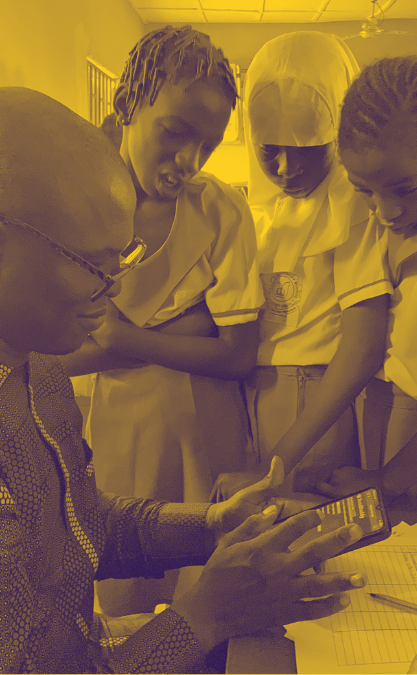
RHGE joined Team4Tech’s AI capacity-building cohort with a goal of promoting responsible AI use in their work with teachers. Cohort feedback and coaching grounded their enthusiasm for AI in the realities of rural Nigerian schools, specifically targeting severe infrastructure, language, and class-size constraints. Throughout the cohort, RHGE built and piloted ReadBuddy, a low-bandwidth, voice-based AI reading companion running on GPT-3.5 that improves early-grade literacy without expensive hardware. RHGE reported that this innovation helped 200 teachers cut their administrative task time in half, allowing them more space to engage directly with their students. RHGE was recognized for their achievement by earning the 2026 AI for the People Prize at ITU’s AI for Good global summit in Geneva.
The most valuable aspect was the practical orientation of the training and its direct relevance to my work. The cohort created a strong learning space to explore how AI can support instructional leadership, teacher coaching, and data-informed decision-making across schools. This training was highly relevant to my role working across schools and supporting system-level improvements. It has enhanced my ability to think strategically about integrating AI into ongoing education programs, particularly in improving teaching quality and student learning outcomes in Sierra Leone.” — COHORT PARTICIPANT
3. Guardrails matter as much as growth.
We favor scaffolded, step-wise adoption grounded in cultural and linguistic relevance, with organizational frameworks for equity, inclusion, transparency, and accountability built in from the start.
- 100% of cohort participants have reported taking proactive steps to ensure ethical use of AI.
- Pre- and post-cohort feedback data have shown that participants’ largest knowledge gains were in the area of understanding how to ensure ethical and equitable expansion of AI solutions, with scores rising from 60% to 90%.
CASE STUDY: EDUCAID, SIERRA LEONE
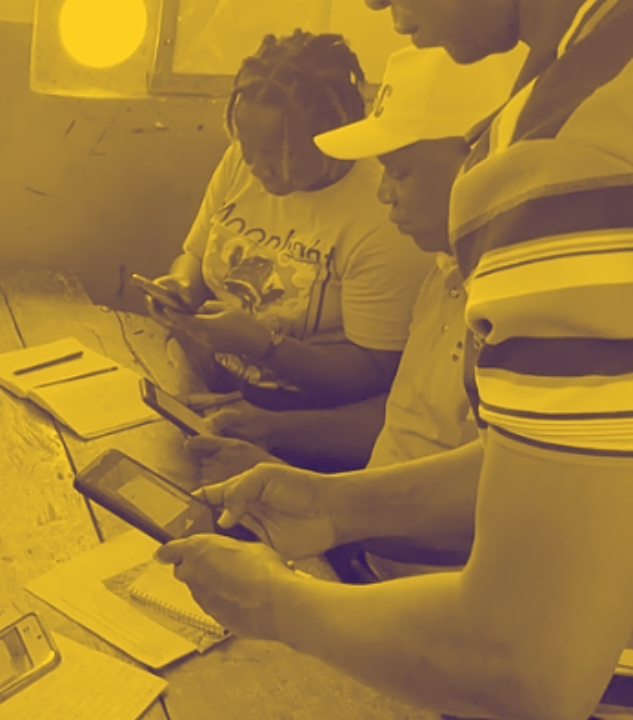
EducAid entered Team4Tech’s AI capacity-building cohort from a place of programmatic strength—the AI component of their work, the Teacher Lesson Plan Prompt Library, was located within a larger strategy they were already scaling. Cohort peer learning and coaching helped EducAid reframe this AI component as a distinct solution with its own challenges and opportunities for management and alignment to evidence. Through the cohort, EducAid developed a Safety and Ethics Framework that their team is building into instructional guides, trainings, and prompt documents. This work supported EducAid to embed safety and ethics into their AI use from the ground up.
The cohort moved beyond simply introducing AI tools and concepts; it challenged participants to critically examine organizational challenges and identify meaningful ways AI could improve efficiency, decision-making, learning experiences, and program outcomes. This made the learning highly relevant, actionable, and immediately applicable to our work.” — COHORT PARTICIPANT
4. Combine peer learning with high-touch coaching for maximum effectiveness.
Peer learning opportunities and high-touch coaching help prepare our NGO partners to work effectively with national education systems. Our coaches walk NGOs through the “build vs. buy” question for AI tools to help prepare them for connecting with government systems—understanding the funding flows, decision-making structures, and pathways needed to scale.

- Participants named coaching support among the biggest factors in making implementation efforts achievable for their organizations.
- Ongoing coaching and technical assistance have surfaced as the most requested forms of support from NGOs. Participants most frequently requested continued coaching and technical assistance, followed by funding, technical/product development support, government partnership support, and M&E/evidence-generation support. This indicates that while our cohorts are meeting learning objectives, NGOs still need hands-on support as they move from roadmap development into implementation.
CASE STUDY: DIGNITAS, KENYA

Dignitas participated in two Team4Tech AI capacity-building cohorts to support building AI features in their coaching solution, LeadNow, and scaling their AI-powered teacher coaching assistant. Peer knowledge exchange and cohort coaching helped Dignitas reframe how they thought about their work around this AI-powered product. The team entered asking ‘how do we improve the AI coaching feature?’ and left asking ‘how do we build a coaching system that Kenya’s education system can absorb, sustain, and trust?’ Team4Tech’s cohort experience helped Dignitas strategize government alignment, financial sustainability models, and “build vs. buy” decisions to prepare their LeadNow platform for integration into Kenyan national systems. Dignitas finished their recent cohort having created a cost-effectiveness investment case and an outcome evidence framework to demonstrate system readiness to Kenya’s Ministry of Education.
5. AI quality assurance is the next frontier for responsible scale.
As NGOs move from using AI to building and scaling AI solutions, they need support to strengthen safeguards and generate credible evidence.
- Our post-cohort data identified that evidence on AI solutions is an ongoing area for growth. Roadmaps and coaching notes demonstrate that NGOs still need support defining golden indicators, designing A/B tests or rapid evaluations, assessing product quality, and generating evidence that can support government adoption and funder investment. The cohort exposed participants to AI quality assurance concepts and helped organizations identify gaps in their current approaches, but additional support is needed to translate these concepts into practical evaluation plans, product review processes, and evidence-generation strategies.
- Team4Tech is part of a joint initiative with Fab AI, IDinsight, the Center for Global Development, Better Purpose, and Laterite, leading quality assurance for teacher-facing AI tools across LMIC education systems. Key outcomes from this sector-shaping work include:
- Advancing rigorous research on AI-for-education solutions to enable their safe, equitable, and effective use.
- Helping NGOs adopt vetted AI tools and evidence-based practices through trainings, peer learning cohorts, and curated resources.
- Informing product development, government policy, and sector-wide decisions on investment, implementation, and scale.
CASE STUDY: EDUCATE!, RWANDA

Educate! joined Team4Tech’s AI capacity-building cohort with a working product and an established partnership with Rwanda’s Ministry of Education, but sought support for building an AI analytics layer into their CAMIS system—Rwanda’s national assessment information system that collects continuous data from more than 4 million students across the country. Cohort support helped focus Educate!’s efforts on AI quality assurance, data sovereignty, and generating credible evidence to transition their analytics layer to national scale. With peer feedback and cohort coaching, Educate! conducted a system migration to an open-source platform, ensuring full data privacy and low-cost government ownership.
Learn more about Team4Tech’s AI capacity-building initiatives and explore our case studies for an in-depth look at how we’re supporting NGOs at all stages of their AI adoption journey.